
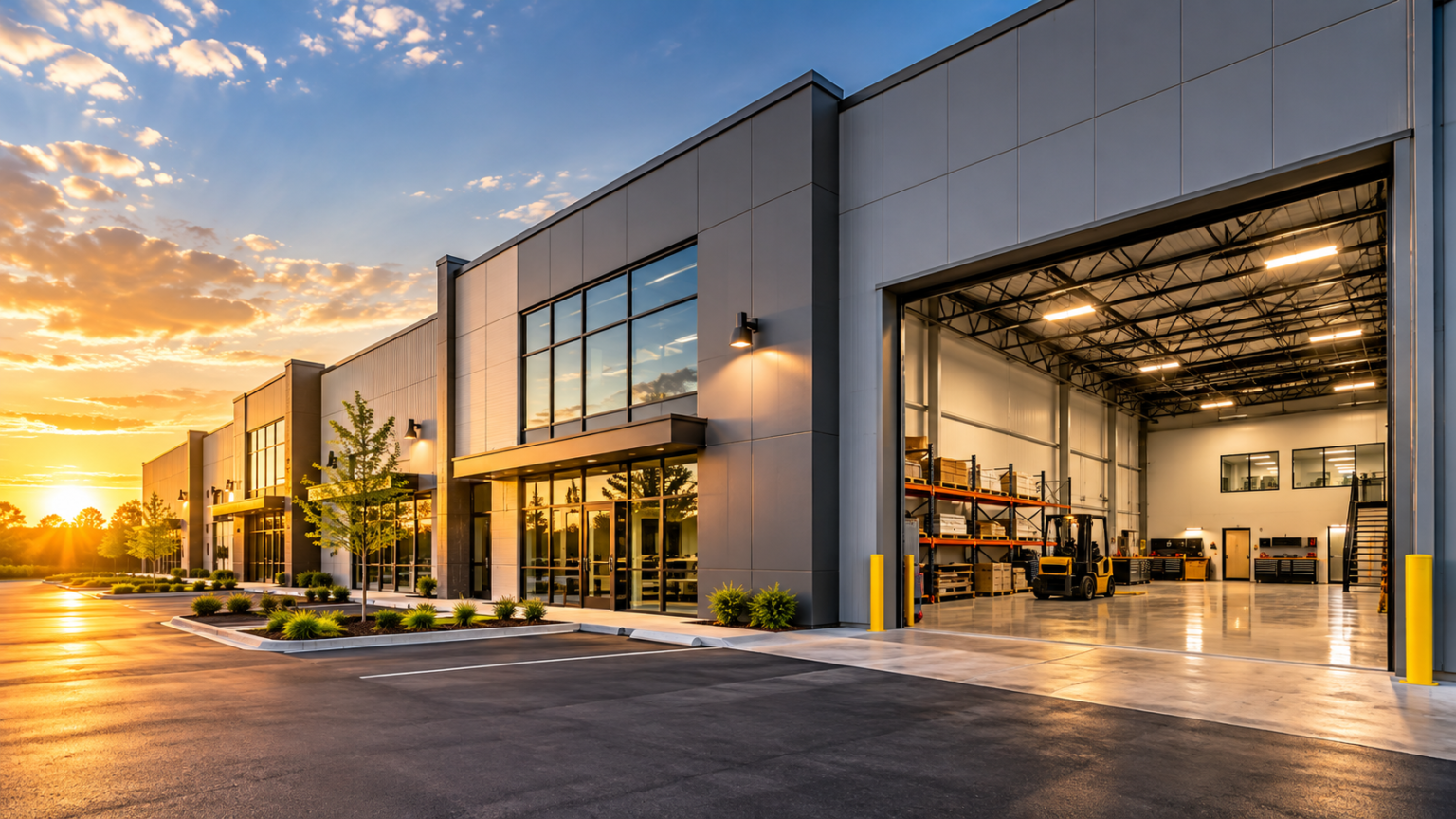
When I evaluate industrial flex properties, I look beyond their current popularity and focus on what matters most to commercial real estate investors: adaptability, tenant demand, and long-term investment potential.
I evaluate flex space, sometimes referred to as tech properties in certain markets, from both the owner’s and the tenant’s perspective. Can the property accommodate different types of businesses? If a tenant leaves, how easily can I see the space being leased to another user?
These are important questions because a property’s long-term potential isn’t determined by its current tenant alone. I also consider how well the property can adapt to changing business needs and market conditions.
In my latest video, I share why flexibility matters when evaluating commercial real estate and how adaptable properties may offer advantages for investors and property owners.
What Makes Industrial Flex Properties Worth Considering?
When I look at industrial flex space, one of the first things I consider is its ability to serve different business types.
Depending on the property’s layout, permitted uses, and infrastructure, flex space may accommodate a combination of office, technology, light industrial, or other business operations.
I believe this adaptability is worth examining because businesses have different space requirements. A property that can meet the needs of multiple potential tenants may offer more leasing options than one designed for a very specific use.
However, I don’t assume every flex property is automatically a strong investment. I look at the property’s actual capabilities, its location, and the types of businesses that could realistically occupy the space.
The key is understanding what the property can offer today and how it might serve future tenants.
Why I Look at Flexibility When Evaluating Commercial Real Estate
1. Can the Property Accommodate Different Business Types?
When evaluating an industrial flex property, I consider whether its design and functionality can support more than one type of business.
A property’s layout, access, utilities, and other physical characteristics can influence the range of tenants it can serve. Zoning and permitted uses also play an important role.
I want to understand whether the property has the flexibility to appeal to different businesses without requiring extensive modifications.
For investors, this is an important consideration when assessing a property’s marketability and potential tenant pool. The broader the range of suitable users, the more options an owner may have when bringing the property to market, provided there is actual demand for those uses.
2. How Easily Could I Lease the Property if a Tenant Leaves?
Tenant turnover is something I consider when looking at the long-term potential of a commercial property.
When a tenant leaves, the owner must find another qualified user, prepare the space, and manage the potential loss of rental income during the vacancy.
I look at whether the property could accommodate another tenant without requiring significant changes. If the space is highly specialized, finding a replacement user may be more challenging. If the property can serve different permitted uses, the owner may have more potential leasing options.
Of course, flexibility doesn’t guarantee a shorter vacancy. Rental rates, location, property condition, and market demand still matter.
However, I believe understanding how easily a property can transition between tenants is an important part of evaluating its long-term leasing potential.
3. Does the Property Offer Long-Term Investment Potential?
When I evaluate commercial real estate, I don’t focus exclusively on what a property can generate today. I also consider how it may perform as market conditions and tenant requirements change.
Industrial flex properties can be worth considering because adaptable space may give owners more options when responding to different tenant needs.
For me, the important question is whether the property’s flexibility creates a practical advantage in its specific market.
I consider factors such as acquisition costs, potential rental income, operating expenses, necessary improvements, competing properties, and the demand from prospective tenants.
A flexible property isn’t automatically a better investment, but adaptability is one factor I believe investors should examine when comparing opportunities.
What I Recommend Evaluating Before Investing in Industrial Flex Space
Before making an investment decision, I would encourage property owners and investors to look beyond the building’s classification and evaluate how the property actually functions.
Here are several factors I would consider:
- Tenant demand: What types of businesses are looking for space in the property’s market?
- Property functionality: Does the layout support the needs of potential tenants?
- Permitted uses: Are the intended business activities allowed under applicable zoning and occupancy requirements?
- Reconfiguration costs: Would the property require significant improvements to accommodate another tenant?
- Market competition: How does the property compare with other available industrial and flex spaces?
- Leasing potential: What types of tenants could realistically occupy the property, and what factors could affect the time needed to lease it?
I believe these questions help investors evaluate whether a property offers genuine flexibility rather than simply relying on its marketing description.
For more insights into industrial real estate, I also recommend reading our articles on Industrial Property Investment Upgrades to Maximize Income.
These topics can help investors think more carefully about property improvements, market conditions, and the factors that influence industrial real estate decisions.
My Takeaway: Flexibility Can Create Resilience
When I evaluate industrial flex properties, I look beyond current popularity. I want to understand whether a property can accommodate different business types, how easily it could be leased to another tenant, and whether its adaptability supports its long-term investment potential.
For me, flexibility is about having options. A property that can serve different users may give its owner more ways to respond when tenant requirements or market conditions change.
That doesn’t eliminate investment risk, and every property requires its own evaluation. But I believe adaptability deserves a place in the conversation when investors compare commercial real estate opportunities.
If you’re considering an industrial flex property in Metro Detroit, I encourage you to look closely at its functionality, potential tenant pool, and position within the local market.
Are you evaluating an industrial property or considering your next commercial real estate investment?
I’d be happy to discuss your goals, answer your questions, and help you evaluate potential opportunities in the Metro Detroit market.
Larry Emmons
Newmark
Email: larry.emmons@nmrk.com
Mobile: 248.705.9115
Office: 248.447.2707
You can also watch my short video on why flexibility matters in commercial real estate for more practical insights.