
A triple net lease (NNN) is the holy grail of rental property ownership. It transforms you from an active property manager into someone who simply collects rent checks while tenants handle everything else. But many landlords don’t understand how to structure these leases properly or find the right tenants.
If your commercial lease doesn’t include this structure, you could be losing thousands of dollars every year. Let me explain why triple net leases are a landlord’s best friend.
What is a Triple Net Lease (NNN)
A triple net lease is a commercial lease where tenants pay three additional costs beyond base rent: property taxes, insurance, and maintenance. That’s where the “triple” comes from.
The Three “Nets”:
- Net Property Taxes – Tenant pays all property taxes
- Net Insurance – Tenant pays building insurance premiums
- Net Maintenance – Tenant handles all repairs and upkeep
Think of it this way: You own the building, but the tenant operates it like they own it. They handle the headaches, you collect the income.
NNN vs Gross Lease vs Modified Gross
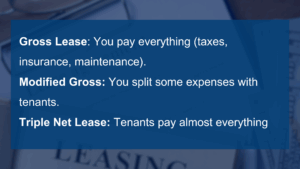
Most commercial leases fall somewhere between these extremes, but true NNN leases give landlords the most protection and predictable income.
Benefits for Landlords and Tenants
Landlord Benefits:
- Predictable monthly income
- No surprise repair bills
- Reduced management responsibilities
- Protection against inflation
Tenant Benefits:
- Control over property maintenance
- Lower base rent (since they pay expenses)
- Ability to customize space
- Potential tax deductions for business expenses
How NNN Leases Affect Property NOI
Triple net leases can dramatically improve your property’s net operating income and overall value.
Let’s compare two identical buildings:
Building A (Gross Lease):
- Gross rent: $20 per square foot
- Operating expenses: $8 per square foot
- NOI: $12 per square foot
Building B (NNN Lease):
- Base rent: $12 per square foot
- Tenant pays all expenses: $8 per square foot
- NOI: $12 per square foot
The NOI is the same, but Building B offers much more predictable income. You know exactly what you’ll receive each month regardless of expense fluctuations.
Triple Net Lease Investment Returns
NNN properties typically trade at lower cap rates (4-7%) because of their stability, but that lower cap rate means higher property values.
If both buildings above had the same NOI, but Building B trades at a 6% cap rate while Building A trades at 8% due to management intensity:
- Building A value: $1,500,000 (NOI ÷ 8%)
- Building B value: $2,000,000 (NOI ÷ 6%)
The NNN structure adds $500,000 in value to the same income stream.
Structuring Your NNN Lease
The devil is in the details with triple net leases. Here’s what you must include:
Essential Clauses in Triple Net Leases
Tax Clause: Tenant pays all property taxes, including any increases during the lease term.
Insurance Clause: Tenant maintains comprehensive insurance, including:
- General liability ($1-2 million minimum)
- Property insurance (full replacement value)
- Business interruption insurance
- The landlord is named as an additional insured
Maintenance Clause: Tenant is responsible for:
- All interior maintenance and repairs
- HVAC system maintenance
- Parking lot upkeep
- Landscaping
- Snow removal
CAM Charges and How to Calculate Them
Even in NNN leases, some common area maintenance charges might apply for multi-tenant properties:
Typical CAM Expenses:
- Shared area cleaning
- Common area utilities
- Landscape maintenance
- Parking lot repairs
- Property management fees
CAM Calculation: Total CAM expenses ÷ Total leasable square feet = Cost per square foot
Then multiply by each tenant’s square footage to determine their share.
Rent Escalation Strategies
Build in annual rent increases to protect against inflation:
- Fixed percentage (2-3% annually)
- Consumer Price Index (CPI) adjustments
- Fair market value resets every 5 years
Finding and Vetting NNN Tenants
Not every business makes a good NNN tenant. Here’s what to look for:
Credit Requirements for NNN Tenants
Minimum Requirements:
- 3+ years in business
- Positive cash flow for 2+ years
- Personal guarantee from principals
- Financial statements reviewed by a CPA
Preferred Tenants:
- National or regional chains
- Businesses with recurring revenue
- Service companies with steady demand
- Medical or professional practices
National vs Regional vs Local Tenants
National Tenants (Best):
- Corporate guarantees
- Proven business models
- Long-term lease commitments
- Higher rent rates
Regional Tenants (Good):
- Local market knowledge
- Personal relationships possible
- Moderate rent rates
- Some flexibility in negotiations
Local Tenants (Risky):
- Require strong personal guarantees
- More hands-on management is needed
- Lower rent rates
- Higher turnover risk
Industry Sectors Best Suited for NNN
Excellent NNN Tenants:
- Fast food restaurants
- Auto parts stores
- Dollar stores
- Pharmacies
- Banks
- Medical offices
Good NNN Tenants:
- Professional services
- Fitness centers
- Day care centers
- Veterinary clinics
Avoid for NNN:
- Restaurants (high failure rate)
- Retail clothing (seasonal/cyclical)
- Startups without a track record
Common Mistakes and How to Avoid Them
Even experienced landlords make these NNN lease mistakes:
What Landlords Still Pay for in NNN Leases
Structural Elements:
- Foundation repairs
- Load-bearing wall issues
- Major roof replacement (sometimes)
Building Shell:
- Exterior walls (beyond normal maintenance)
- Windows and doors (replacement, not maintenance)
Code Compliance:
- ADA improvements required by law
- Environmental cleanup (pre-existing)
Roof and Structure Responsibilities
This is where most disputes happen. Clearly define:
- Tenant maintains roof (repairs, minor patches)
- The landlord replaces the roof when it reaches the end of its useful life
- Tenant is responsible for damage from neglect
- Landlord covers damage from normal wear/weather
Insurance Requirements and Coverage Gaps
Required Insurance Policies:
- General liability: $1-2 million
- Property insurance: Full replacement cost
- Workers’ compensation: As required by law
- Automobile: $1 million (if applicable)
Coverage Gaps to Address:
- Who covers damage during tenant improvements?
- What if the tenant’s insurance doesn’t cover all repairs?
- Who handles insurance claims and deductibles?
Detroit NNN Market Opportunities
Detroit offers unique opportunities for NNN investments:
Best Locations for NNN Properties in Detroit
Prime Areas:
- Downtown corridors with foot traffic
- Suburban shopping centers
- Medical districts near hospitals
- Auto-related businesses (Detroit specialty)
Average NNN Lease Rates by Area:
- Downtown: $15-25 per square foot
- Midtown: $12-20 per square foot
- Suburbs: $8-15 per square foot
- Industrial areas: $6-12 per square foot
Tenant Demand Trends in Detroit
Growing demand for:
- Healthcare services (aging population)
- Auto-related services (industry recovery)
- Food and beverage (downtown revival)
- Professional services (business growth)
Sample NNN Lease Terms
Here’s what a typical NNN lease structure looks like:
Basic Terms:
- Base rent: $12 per square foot annually
- Property taxes: $3.50 per square foot
- Insurance: $0.75 per square foot
- Maintenance reserve: $1.25 per square foot
- Total tenant cost: $17.50 per square foot
Lease Length: 10 years with two 5-year renewal options. Rent Increases: 2% annually. Personal Guarantee: Required for local tenants. Use Restrictions: Defined in the lease
Conclusion
Triple net leases represent the ultimate in passive real estate income, but they require careful structuring and tenant selection. When done right, NNN leases provide predictable income, reduce management headaches, and increase property values.
The key is finding creditworthy tenants who understand their responsibilities and have the financial capacity to handle all property expenses. Take time upfront to structure the lease properly, and you’ll enjoy years of worry-free income.
Ready to explore NNN lease opportunities for your commercial property? Our team specializes in helping landlords structure profitable triple net leases and find qualified tenants.
Contact us today for professional NNN lease guidance and tenant placement services.